Tatami mats and room sizes: how Japan measures a room, and how to live on tatami
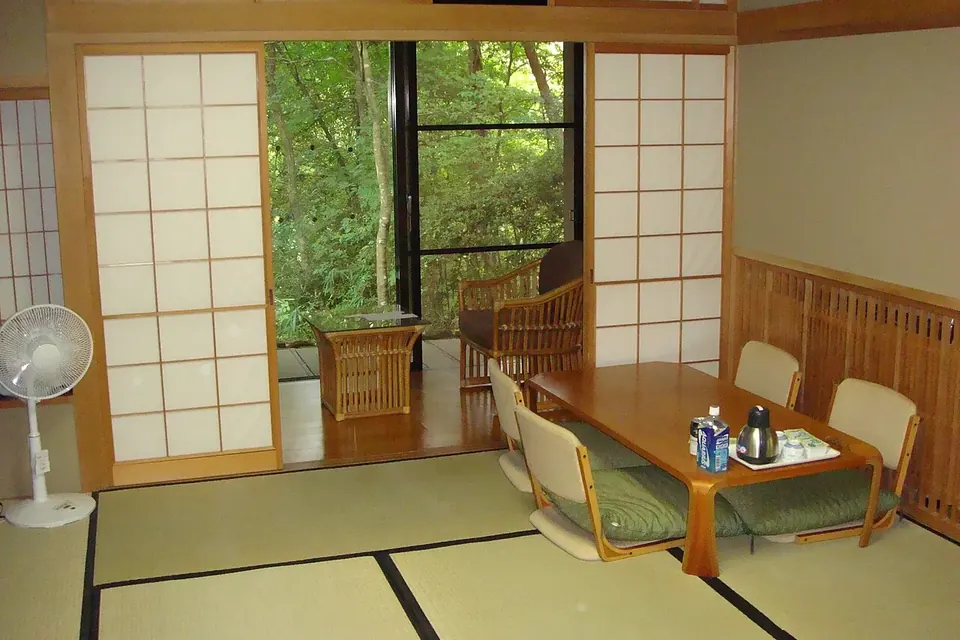
Few objects shape Japanese homes as much as the tatami mat. For centuries it set the size of rooms, the way people sat and slept, and even how property is described in advertisements today. Modern flats may have only one tatami room, or none at all, but the mat survives as a unit of measurement. Understanding it makes Japanese floor plans readable, and explains why a "six-mat room" in Kyoto is bigger than one in Tokyo.
- A tatami mat is a firm core, traditionally rice straw, covered with a woven surface of soft rush (igusa), with fabric edging along the long sides.
- Mats are roughly twice as long as they are wide, but the size varies by region: Kyoma is about 191 × 95.5 cm, Edoma about 176 × 88 cm.
- Rooms are measured in 畳 jō (mats); in advertising, each jō must correspond to at least 1.62 m².
- Tatami should not be walked on in shoes, and needs airing and dry conditions to avoid mould.
What a tatami mat is
A traditional mat has three parts. The core (tatami-doko) was originally compressed rice straw, several centimetres thick; many modern mats use layers of insulation board or polystyrene foam, which are lighter and resist insects and moisture better. The surface (tatami-omote) is woven from soft rush, which gives fresh mats their green colour and grassy smell, fading to a golden straw tone with age. The edging (heri) is a fabric binding along the long sides. Some modern mats are square and unedged, or use woven paper or synthetic fibre instead of rush.
Prints from the nineteenth century already advertised the rush of particular regions, such as Bingo in present-day Hiroshima Prefecture, as a mark of quality.
Why mats come in different sizes
Tatami sizes developed differently in different regions. In western Japan, rooms were laid out around a standard mat size and the building was sized to fit. In eastern Japan, the building grid often came first, measured between the centres of the pillars, and mats were cut to fit what was left, which made them smaller. Several standards survive:
| Name | Approximate size | Area per mat | Where it is common |
|---|---|---|---|
| Kyoma (京間) | 191 × 95.5 cm | about 1.82 m² | Kyoto and western Japan |
| Chukyoma (中京間) | 182 × 91 cm | about 1.66 m² | Nagoya area and parts of central Japan |
| Edoma (江戸間) | 176 × 88 cm | about 1.55 m² | Tokyo, eastern Japan, now widespread |
| Danchi-ma (団地間) | 170 × 85 cm | about 1.45 m² | Apartment blocks (danchi) and many modern flats |
A six-mat room is therefore about 10.9 m² with Kyoma mats but about 8.7 m² with danchi-ma mats: a difference of more than two square metres for the same description.
Jō, tsubo and square metres
Japanese real estate advertisements must give floor areas in square metres, but room sizes are almost always also shown in jō, because people picture rooms that way. To stop the jō from being stretched, the real estate industry's fair-competition rules require that, where a room is described in jō, each jō must correspond to at least 1.62 m² of floor area. A "6-jō" Western-style room with no tatami in it should therefore be at least about 9.7 m².
Land and whole buildings are often described in tsubo, a traditional unit equal to about 3.3 m², roughly the area of two mats. You will still hear prices quoted "per tsubo" in property and in shop rents.
If you are reading listings, our guide to living small the Japanese way explains layout codes such as 1K and 1LDK.
How mats are laid
Because a mat is a 2:1 rectangle, rooms come in a limited set of sizes: 3, 4.5, 6, 8 and 10 mats are common. Traditional layouts follow customs:
- Avoid four corners meeting. Mats are usually laid so that the corners of three mats meet in a T, not four in a cross, which was considered inauspicious and also makes the floor less stable.
- The half mat. A 4.5-mat room has a half mat in the centre, a classic size for tea rooms.
- Don't step on the edges. Etiquette in traditional settings, such as tea rooms and temples, asks you not to step on the fabric edging or on the threshold rail of sliding doors.
For the wider picture of the rooms around the mats, see our guide to Japanese houses, old and new.
Living on tatami
Tatami is meant for bare or socked feet. Shoes are left at the entrance, and in some homes even house slippers are removed before stepping onto tatami; our guide to the genkan explains the layers of "inside". Furniture is traditionally light and low: a low table, cushions, and futons that are folded away during the day. Heavy furniture with narrow legs dents the rush; spreading the load with a board or a rug helps if you must place shelving on a tatami floor.
Caring for tatami
- Keep it dry. Rush and straw absorb moisture. In humid weather, ventilate the room, avoid leaving futons on the mats all day, and use a dehumidifier if needed. Mould on tatami usually starts under furniture or bedding.
- Vacuum along the weave, not across it, to avoid lifting fibres.
- Wipe with a dry or barely damp cloth. Too much water stains and encourages mould.
- Protect from direct sun if you want to slow fading.
- Refresh periodically. Traditionally, worn surfaces are flipped (uragaeshi) after a few years, then re-covered (omotegae) with new rush, and the whole mat is replaced only when the core wears out.
Tatami outside Japan
Imported mats are sold for meditation, martial arts and bedrooms. Choose a size that fits your room, since a Japanese standard rarely matches Western dimensions. Foam or board cores are lighter and more practical away from Japan's specialist tatami makers, and synthetic surfaces cope better with humidity and pets. As in Japan, the mats are happiest in a dry, ventilated room, walked on without shoes.
Sources
- Real Estate Fair Trade Council, Fair Competition Code concerning the representation of real estate (rule of 1.62 m² per jō), as summarized in the Sumitomo Mitsui Trust Research Institute real estate glossary.
- Utagawa Kuniyoshi, "No. 43 Bingo tatami (Tatami from Bingo)", woodblock print, British Museum collection (BM 2008,3037.02135).
- Ministry of Land, Infrastructure, Transport and Tourism (MLIT), housing statistics and standards, MLIT.
 Homes and small spaces
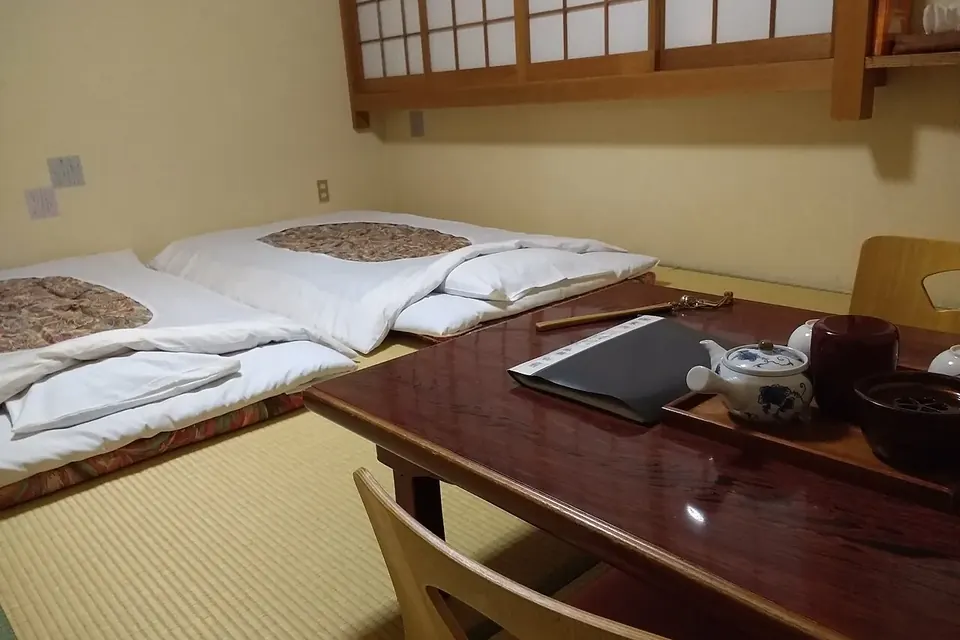
Living small the Japanese way
Rooms that change use, storage in the walls, sliding doors and a real entrance: lessons from Japanese homes for any small flat.
 Homes and small spaces
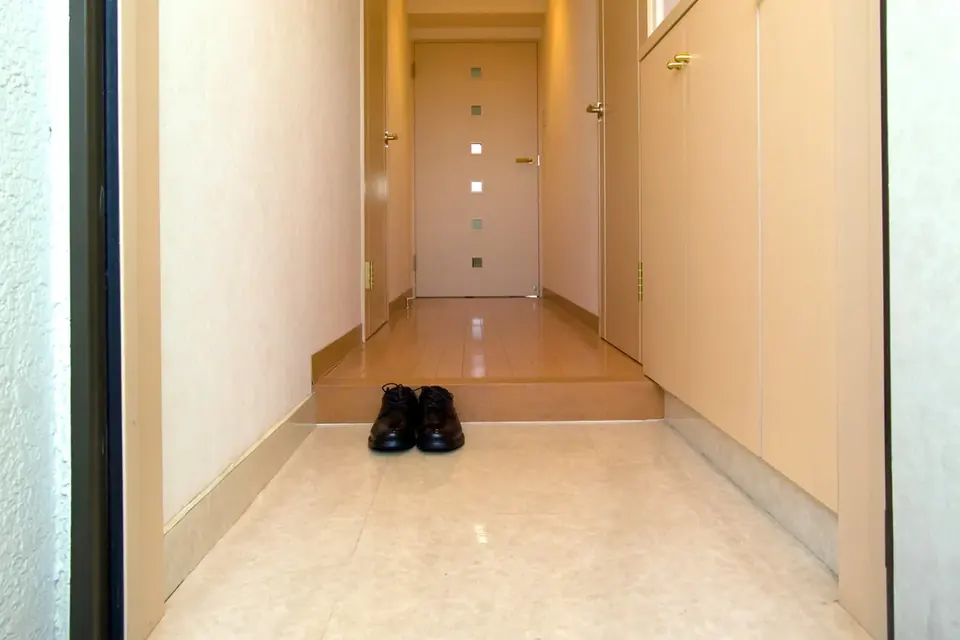
The genkan and shoes-off homes
Why shoes stop at the step, which slippers go where, and how to visit a Japanese home without a misstep.
 Homes and small spaces
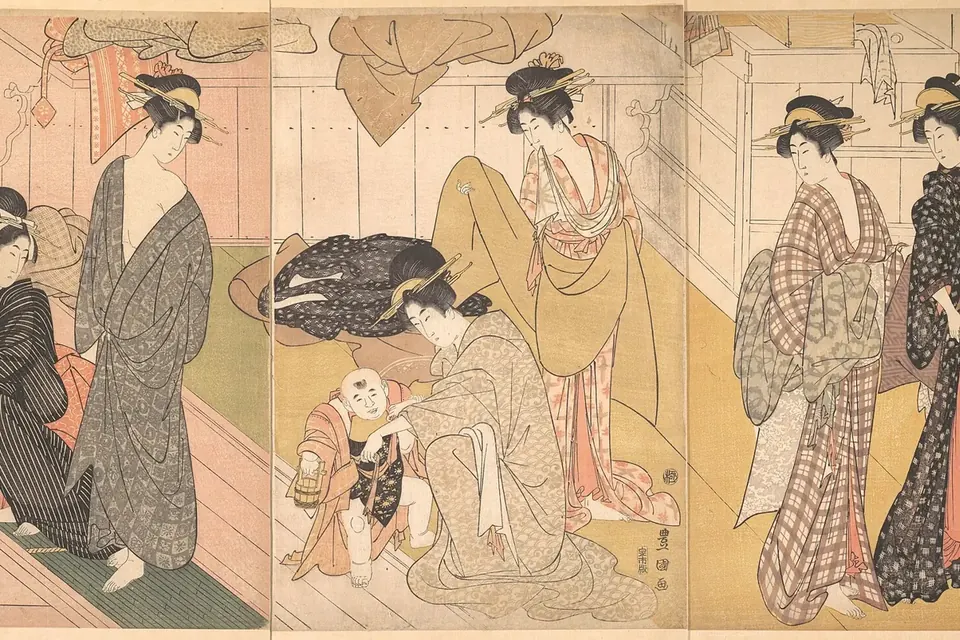
The Japanese bath, from ofuro to onsen
Wash first, then soak: how the home bath works, what a neighbourhood sento costs, and onsen etiquette including tattoos.