The Japanese bath: ofuro at home, sento and onsen, and how to use them
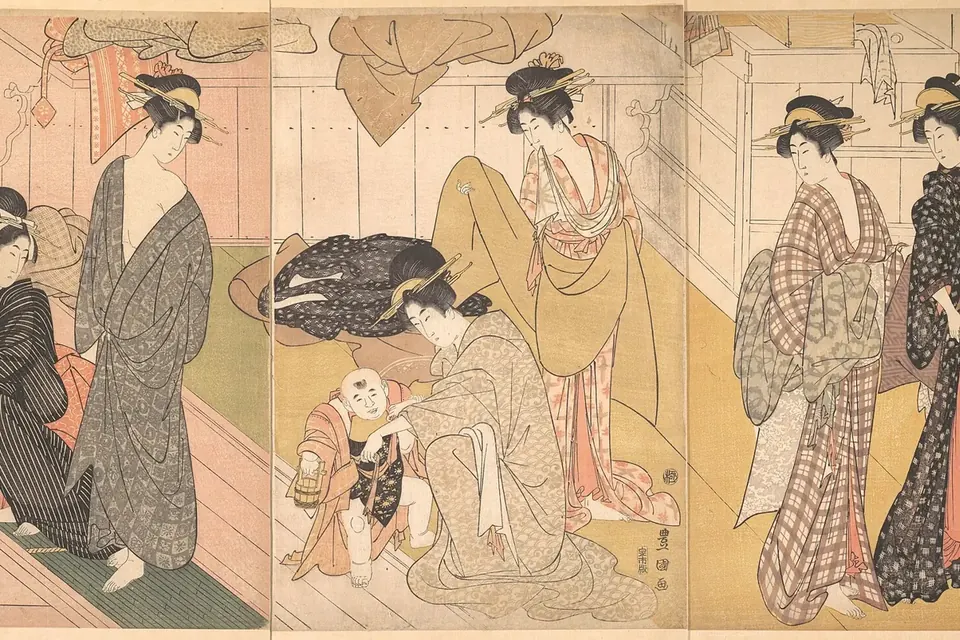
In Japan, a bath is not mainly for getting clean. You wash first, thoroughly, outside the tub, and only then get into deep, hot water to soak and relax. That one rule explains almost everything else about Japanese bathing: why the tub water at home is shared by the whole family, why a neighbourhood bathhouse has rows of low taps and stools, and why a hot-spring resort can welcome hundreds of strangers into the same pool.
- Wash and rinse completely before entering any bath, at home, in a sento or at an onsen.
- The bath is for soaking: no soap, no washing, and towels stay out of the water.
- At home, the tub water is often kept for the next person, so don't pull the plug.
- Tattoo policies vary; many facilities still refuse visible tattoos, others allow them covered or in private baths.
The home bath: ofuro
A typical Japanese bathroom is a waterproof room with a drain in the floor, a shower and stool on one side and a deep, fairly short tub on the other. Many flats have a prefabricated "unit bath", a moulded room that comes in one piece. The washing area is outside the tub.
- Undress in the changing room (datsuijo), usually where the washing machine and washbasin are.
- Rinse and wash at the shower, sitting on the stool: body, hair, everything.
- Rinse off all soap, then get into the tub.
- Soak, often up to the shoulders, for as long as is comfortable.
- Leave the water. In many households the same bath water is used by everyone in turn, and the lid is closed to keep it warm. Many tubs have an automatic reheating (oidaki) function, and leftover water is sometimes pumped to the washing machine.
Small Japanese flats make room for this by keeping the wet zone compact and separate from the toilet, an idea we look at in living small the Japanese way.
The sento: the neighbourhood bathhouse
Before most homes had baths, people went to the 銭湯 sento, a public bathhouse filled with heated tap water. Many have closed as private bathrooms spread, but city neighbourhoods still have them, often with a tall chimney, a painted mural of Mount Fuji on the wall and a front desk or ticket machine between the men's and women's sides.
In Tokyo, the admission price of an ordinary sento is a regulated maximum set by the Metropolitan Government under a long-standing price-control ordinance. It rose from 550 yen to 600 yen for adults in August 2026. Soap, shampoo and towels are often sold or rented at the desk.
The onsen: hot springs
An 温泉 onsen uses water from a natural hot spring, defined in Japanese law by temperature or mineral content at the source. Onsen range from simple village baths to large resorts and traditional inns (ryokan) with indoor baths and outdoor pools (rotenburo). Each spring has a stated composition, often displayed on a sign near the bath, with its claimed benefits and any precautions.
Etiquette, step by step
| Do | Don't |
|---|---|
| Take off shoes at the entrance and use the shoe locker | Walk in with shoes |
| Enter the correct side: 男 (men), 女 (women), often marked by blue and red curtains | Assume the sides stay the same every day; some baths swap them |
| Undress fully in the changing room; keep valuables in a locker | Wear a swimsuit, unless the bath says so |
| Wash thoroughly at the taps, seated | Splash neighbours or leave soap on the stool |
| Keep the small towel out of the water, on your head or the side | Put towels or your head under the water |
| Tie up long hair | Let hair float in the bath |
| Dry off before returning to the changing room | Drip across the changing room floor |
| Drink water before and after | Bathe after drinking alcohol |
Tattoos
Tattoos have long been associated in Japan with organized crime, and many baths display signs refusing guests with tattoos. In a 2015 survey of hotels and inns by the Japan Tourism Agency, 56% of the facilities that responded said they refused guests with tattoos, 31% said they did not, and 13% allowed them if covered. In 2016 the agency asked operators to consider that many visitors have tattoos for cultural, religious or fashion reasons, and suggested options such as cover stickers, separate bathing times or private baths.
In practice: check the facility's policy before you go, small tattoos covered with a skin-coloured patch are accepted in some places, and private family baths (kashikiri-buro) or in-room baths at ryokan avoid the question altogether.
Bathing safely
Hot baths raise body temperature and lower blood pressure. Japanese health authorities warn every winter about bathing accidents among older people, often linked to large temperature differences between a cold changing room and hot water. Warm the bathroom first, keep the water moderate (around 41 °C or below), limit soaks to about ten minutes, drink water, and don't bathe after alcohol or a heavy meal. People with heart conditions, high blood pressure or pregnancy should ask a doctor about hot-spring bathing.
The bath is one of the rooms that has changed least as Japanese houses modernized; our guide to Japanese houses follows the rest of the home.
A note on mixed and family bathing
Some rural onsen still have mixed-sex baths (konyoku), sometimes with bathing wraps allowed; they are rare and have their own customs. Children can usually enter with a parent of either sex up to an age set by local rules. Private baths are the easiest option for families and couples.
Taking off your shoes at the door, and then your clothes before the bath, are two steps of the same idea: leaving the outside world behind in stages. Our guide to the genkan covers the first.
Sources
- Japan Tourism Agency, survey of accommodation facilities on tattoos and bathing (2015) and notice to operators (2016), as reported by Japanese and English-language press.
- Tokyo Metropolitan Government, maximum admission price for ordinary public baths (Tokyo public bath fee control), 2026.
- Consumer Affairs Agency, warnings on bathing accidents among older people in winter, consulted October 2026.
- Ministry of the Environment, Hot Springs Act (definition of an onsen), consulted October 2026.
 Homes and small spaces
Tatami mats and room sizes
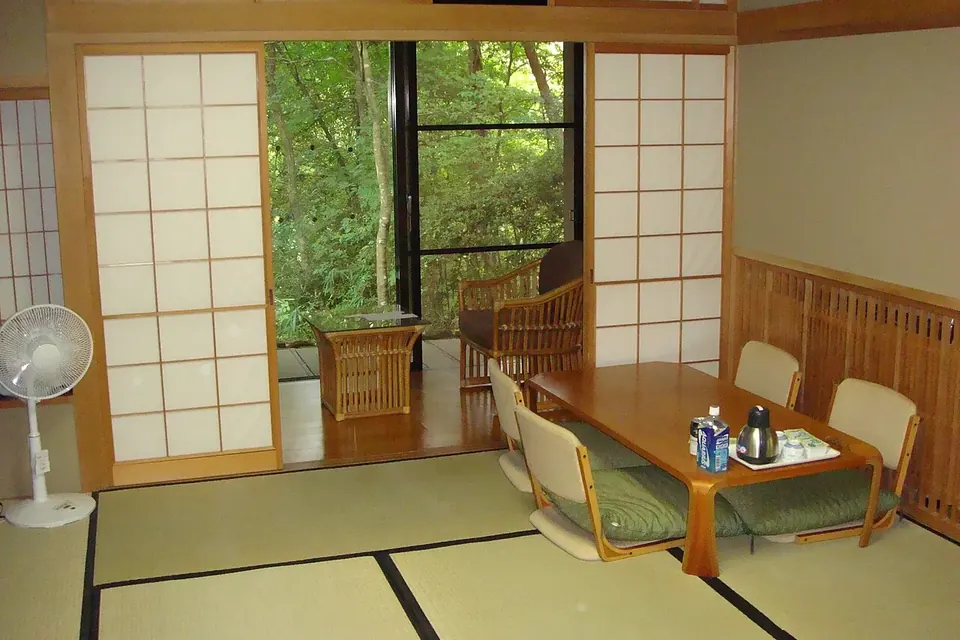
Kyoma, Edoma and danchi-ma: why a six-mat room isn't one size, and how to care for a tatami floor.
 Homes and small spaces
The genkan and shoes-off homes
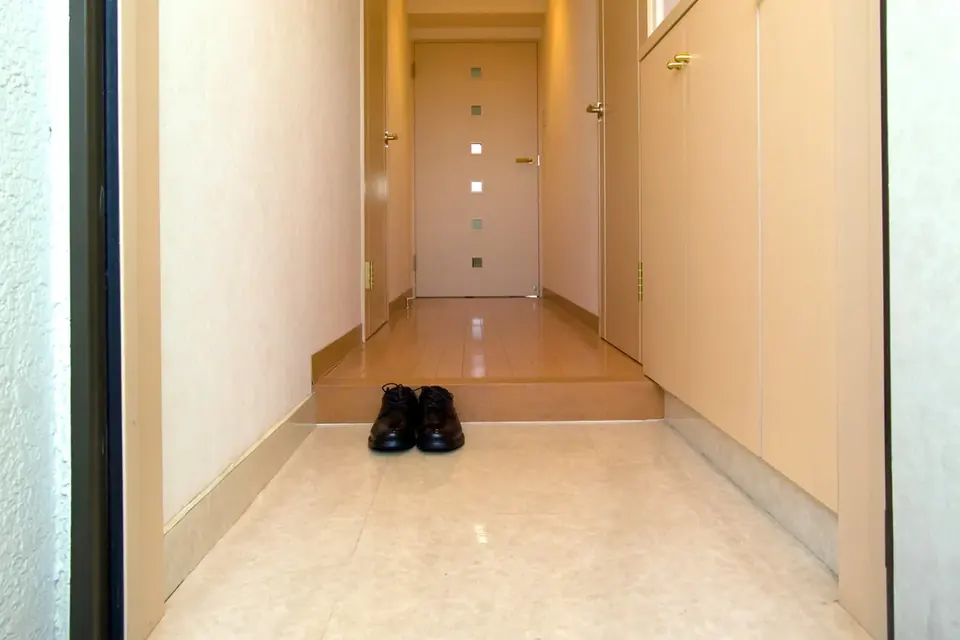
Why shoes stop at the step, which slippers go where, and how to visit a Japanese home without a misstep.
 Homes and small spaces
Living small the Japanese way
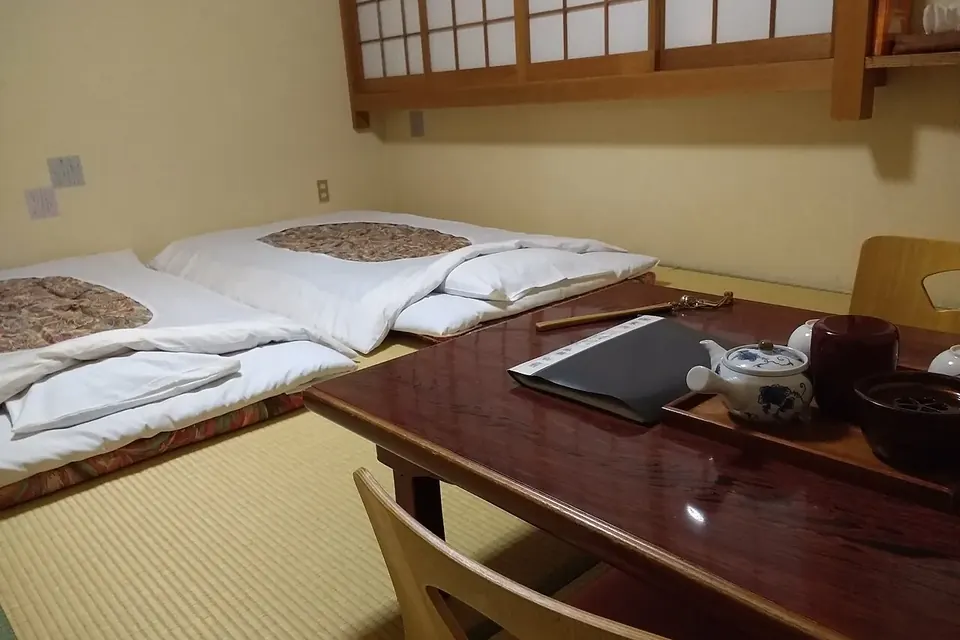
Rooms that change use, storage in the walls, sliding doors and a real entrance: lessons from Japanese homes for any small flat.