Okinawan home cooking: goya chanpuru, fu chanpuru and the island pantry
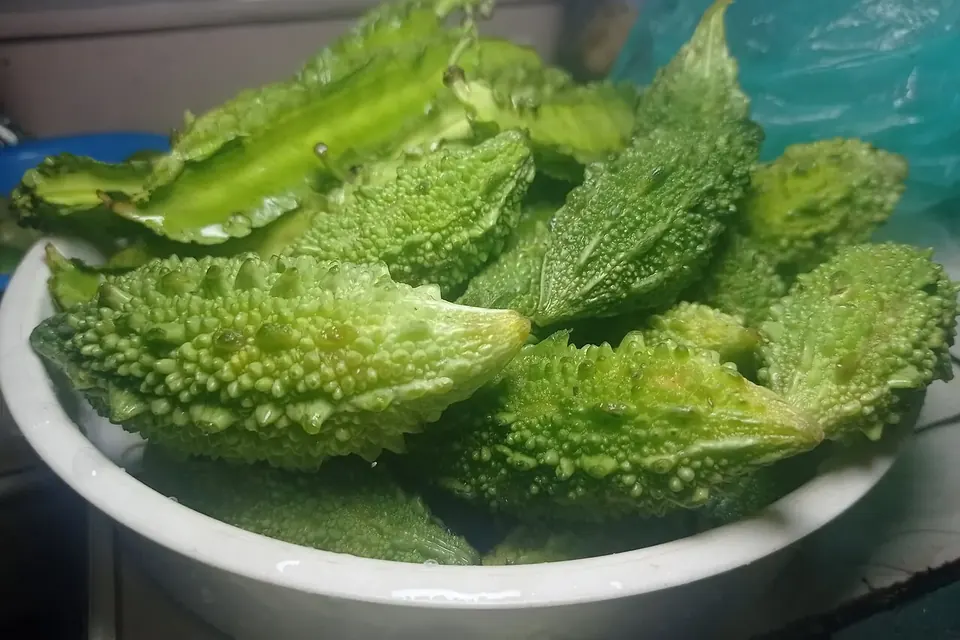
Okinawa, the chain of subtropical islands at Japan's southern end, has a cuisine of its own. It grew out of the Ryukyu Kingdom's trade with China and Southeast Asia, centuries of Satsuma influence, a warm climate and, after 1945, the American presence. Pork appears everywhere, kombu is eaten as a vegetable rather than only used for stock, and the signature home dish is the チャンプルー chanpuru, a quick stir-fry of tofu, vegetables and egg. Its most famous version uses goya, the bitter melon.
- Chanpuru means roughly "mixed" in Okinawan: a stir-fry built around firm tofu, with vegetables, pork or Spam, and egg.
- Goya (bitter melon) is a summer vegetable; Okinawa is Japan's largest producer, followed by Kyushu prefectures such as Miyazaki and Kagoshima.
- To tame the bitterness, scoop out the pith, slice thinly and salt briefly.
- Other island staples: Okinawa soba, rafute (braised pork belly), jūshī (seasoned rice) and kombu dishes.
What makes Okinawan food different
Mainland Japanese cooking traditionally avoided meat for long periods; Okinawan cooking embraced pork, using every part from ears (mimigā) to trotters (tebichi). Kombu, shipped from Hokkaido along historic trade routes, became one of Okinawa's most eaten foods, simmered in large strips rather than used only for dashi. Local tofu (shima-dōfu) is firmer and saltier than mainland tofu, perfect for stir-frying. Pork-and-bonito broths, sweet potatoes, tropical fruit, and the rice spirit awamori complete a pantry that tastes distinct from Tokyo or Kyoto. After the Second World War, canned luncheon meat entered home cooking and is now a common, if divisive, chanpuru ingredient.
The chanpuru family
| Dish | Main ingredient | Notes |
|---|---|---|
| Goya chanpuru | Bitter melon | The classic; summer staple |
| Fu chanpuru | Wheat gluten (fu) soaked in egg | Soft, savoury; good for those who dislike bitterness |
| Tōfu chanpuru | Firm tofu with cabbage, bean sprouts, carrot | The everyday base version |
| Sōmen chanpuru (sōmin chanpurū) | Thin wheat noodles | Quick stir-fried noodles, often with tuna |
| Māmina chanpuru | Bean sprouts | Light and crunchy |
Preparing goya
Choose firm, bright green goya with dense bumps. Cut it in half lengthwise and scrape out the seeds and white pith with a spoon, which carry much of the bitterness. Slice into thin half-moons, about 3 to 5 mm. Toss with a pinch of salt (and, if you like, a little sugar), leave for 10 minutes, then squeeze out the liquid; some cooks also blanch the slices briefly. The aim is to soften the bitterness, not remove it: it is the point of the dish.
Goya chanpuru, step by step
For two to three people:
- Press the tofu. Wrap 300 g of firm tofu (or shima-dōfu) in a towel under a weight for 20 to 30 minutes, then tear into bite-sized pieces.
- Prepare 1 goya as described above, and slice 100 g of pork belly (or Spam, or canned tuna) into strips.
- Brown the tofu in a little oil in a hot frying pan, then set aside.
- Fry the pork until it renders its fat, add the goya and stir-fry for 2 to 3 minutes until just tender.
- Return the tofu, season with a pinch of salt, a little soy sauce and a few pinches of dashi powder or a splash of dashi.
- Add 2 beaten eggs, let them set slightly, then fold everything together until the egg is just cooked.
- Finish with bonito flakes on top and serve with rice.
Fu chanpuru follows the same pattern: soak chunks of dried wheat gluten in beaten egg until they absorb it, then fry with vegetables and pork. Our guide to dashi explains the stock that seasons both.
Beyond chanpuru
- Okinawa soba: thick wheat noodles (no buckwheat) in a pork-and-bonito broth, topped with braised pork belly or spare ribs, pickled ginger and island chilli-infused awamori (kōrēgusu).
- Rafute: pork belly simmered for hours with awamori, soy sauce and brown sugar.
- Jūshī: rice cooked with pork, kombu, shiitake and vegetables, Okinawa's version of seasoned rice; see our guide to cooking Japanese rice.
- Kūbu irichī: shredded kombu stir-simmered with pork and vegetables.
- Chahan: fried rice, often with Spam and goya in Okinawan homes.
- Sweet potatoes: purple beni-imo in tarts and sweets, sold as souvenirs across the islands.
Eating out in Okinawa
In Okinawa, chanpuru and Okinawa soba are everyday restaurant food, served in family-run diners (shokudō) with set meals that include rice, soup and small sides. Menus often list dishes in Okinawan names written in katakana. Prices are usually modest, portions large, and many places have their own house version of each dish. Supermarkets sell ready-made island tofu, Okinawa soba noodles and packets of fu, so you can recreate the dishes at home if you stay in self-catering accommodation.
Goya outside Okinawa
Goya is now grown and eaten across Japan, especially in Kyushu, and many households grow it on balconies as a "green curtain" of leafy vines that shades windows in summer, a practice promoted for saving energy on air conditioning. Outside Japan, bitter melon is sold in Asian groceries as karela or ampalaya; varieties grown for South Asian cooking can be smaller and more bitter, so taste and adjust the salting time.
At New Year, Okinawan tables traditionally feature nakami-jiru, a pork offal soup, rather than the mainland's ozōni; see an Okinawan New Year.
Storing and using leftovers
Whole goya keeps a few days in the fridge, wrapped in paper; once cut, remove the pith first, since it spoils quickly. Sliced goya can be blanched and frozen for stir-fries. Thin, salted slices also make a quick pickle, in the same way as the light pickles described in our guide to tsukemono.
Sources
- Ministry of Agriculture, Forestry and Fisheries (MAFF), Annual production statistics of regional specialty vegetables (goya), as cited in secondary sources, consulted October 2026.
- Ministry of Agriculture, Forestry and Fisheries (MAFF), "Our Regional Cuisines" (Uchi no kyōdo ryōri), Okinawa entries, consulted October 2026.
- Okinawa Prefecture, overview of the prefecture (160 islands, 47 inhabited), consulted October 2026.
 Japanese home cooking
Dashi, the stock behind Japanese cooking
Kombu, katsuobushi, shiitake and niboshi: how each dashi is made, and why umami was discovered in a pot of it.
 Japanese home cooking
Rice in Japan, and how to cook it
Short-grain rice, washed and soaked, cooked by absorption and rested: the method, the ratios and the onigiri that follow.
 Japanese home cooking
Japanese pickles: tsukemono
Salt, rice bran, vinegar, miso and soy sauce: the main families of Japanese pickles and a quick pickle to start with.