Momijigari: Japan's autumn-leaf season, why it now peaks later, and how to enjoy it
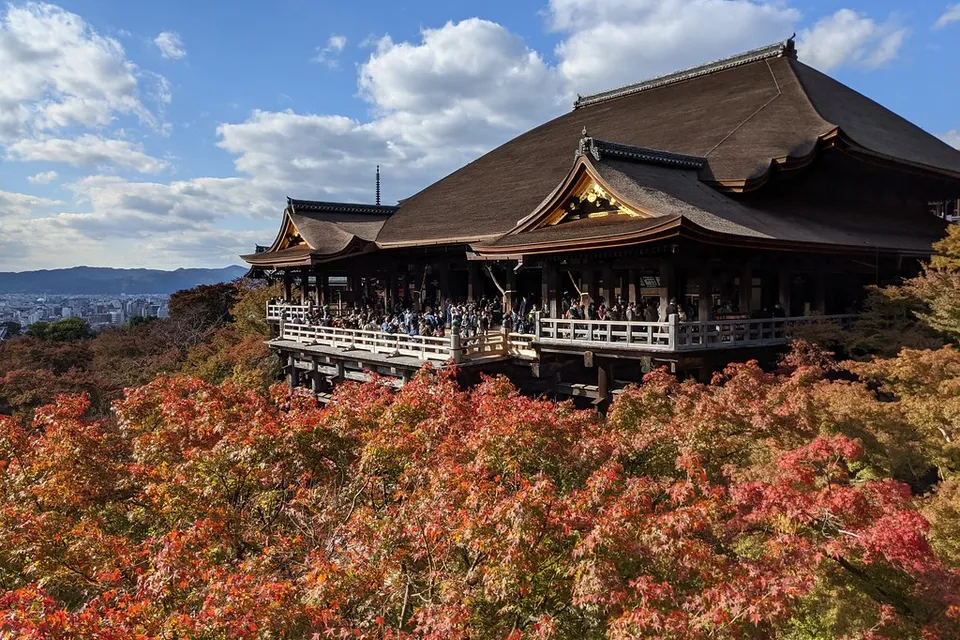
In spring Japan watches the cherry blossom front move north. In autumn it watches a second front move the other way, south from Hokkaido and down from the mountains, as maples, ginkgo and other trees turn red and gold. Going out to look at them has a name of its own: 紅葉狩り momijigari, literally "hunting the red leaves". It is as old as hanami, it fills the same temples and trains, and it has quietly moved later in the year.
- Kōyō (紅葉) is the turning of the leaves; momiji means both red leaves and the Japanese maple; momijigari is going out to see them.
- The colours start in Hokkaido and the high mountains in October and reach Tokyo, Kyoto and Osaka in late November and early December.
- Japan's weather agency finds that its specimen maples now turn about three days later per decade than in the 1950s.
- Famous Kyoto temples charge higher fees and draw large crowds in peak weeks: go early, or choose a lesser-known garden.
An old pastime with a hunting name
Admiring autumn leaves was a pastime of the Heian court, which wrote poems about maples floating on rivers, and it spread to ordinary townspeople in the Edo period, when excursions to the hills outside Edo and Kyoto became popular day trips with food and sake. The word kari, "hunting", is the same one used for picking mushrooms or fruit (matsutake-gari, ichigo-gari): nobody takes anything home but the view.
Unlike the cherry-blossom picnic, momijigari is more often a walk than a party: a temple garden, a mountain path, a gorge seen from a bridge, or a lit-up garden after dark. Many temples and gardens hold evening illuminations (raito-appu) during the peak weeks.
How the season is measured
As with cherry blossoms, the Japan Meteorological Agency (JMA) keeps a phenological record of the leaves. At each observation point, staff watch a specimen tree, usually an iroha-kaede, the Japanese maple (Acer palmatum), and record the kōyōbi, the first day on which the leaves as a whole have turned red and almost no green remains, then the rakuyōbi, when about 80% of the leaves have fallen. The ginkgo is observed in the same way for its yellow leaves. When the JMA cut most of its plant and animal observations in January 2021, the maple and the ginkgo were among the six species it kept, as the Nara Local Meteorological Office explains.
The JMA's own table of maple leaf-colouring dates shows how late the season comes in the cities. In 2025, Tokyo's specimen maple turned on 23 November, five days earlier than its average; Osaka's on 4 December; Kyoto's on 10 December, five days later than average. In the north, Sapporo's turned on 9 November 2026, twelve days later than its average.
| City | Average date | 2025 |
|---|---|---|
| Asahikawa (Hokkaido) | 23 October | 22 October |
| Sapporo | 28 October | 6 November |
| Aomori | 13 November | 10 November |
| Sendai | 21 November | 20 November |
| Nara | 21 November | 14 November |
| Tokyo | 28 November | 23 November |
| Osaka | 1 December | 4 December |
| Fukuoka | 1 December | 1 December |
| Kyoto | 5 December | 10 December |
Average dates worked out from the 2025 observation and its published difference from the average in the JMA table; Hokkaido stations observe related maple species where the iroha-kaede does not grow.
Why the leaves turn later than they used to
Leaves turn red when shortening days and cooler nights tell the tree to stop producing green chlorophyll and to make red pigments instead; warm autumn nights delay the process. Over seven decades of records, the trend is clear. Summarising the government's Climate Change in Japan 2025 report, the Nara office states that since 1954 the maple leaf-colouring date has become later at a rate of 2.9 days per decade, while cherry blossoms open 1.2 days earlier per decade, both statistically significant. Put simply, the red-leaf season in Japan's cities now comes roughly three weeks later than it did when the records began, and a guidebook that promises Kyoto's maples for "early November" is now usually wrong.
The 2026 season fits the pattern. The private Japan Meteorological Corporation's forecast of 4 November, summarised by Nippon.com, expects red foliage to peak around 30 November in Tokyo and 14 December in Kyoto, with western Japan running 8 to 10 days late because of lingering summer heat. Time Out Tokyo, reporting the same update, notes that recent warm weather pushed the forecast back by a day or two in some places.
Planning a trip around the leaves
- Follow the forecasts, not the calendar. The Japan National Tourism Organization publishes an autumn leaves forecast in English, and weather companies update theirs several times a season.
- Use altitude. If you arrive too early for the cities, go up: mountain areas such as Nikko, Hakone or the hills around Kyoto turn weeks before the valley floors.
- Ginkgo first, maples after. In most cities the yellow ginkgo avenues peak a week or two before the red maples, so a late-November visit often catches both.
- Book early for peak weekends. Kyoto hotels fill up for the last week of November, much as they do for cherry blossom season.
Etiquette at crowded temples
The most famous viewing spots are temples and shrines, and the usual manners apply (our guide to visiting shrines and temples covers them). A few points matter more in autumn:
- Expect seasonal fees and queues. At Tōfuku-ji in Kyoto, whose gorge of maples is seen from covered wooden bridges, the fee for the Tsūtenkyō bridge rises from 600 to 1,000 yen during the autumn season, from 15 November to 7 December, according to Japan Guide. Staff may stop photography on the bridges when they are packed.
- Keep moving on narrow paths and bridges. Take your photo and step aside; tripods are banned in many gardens.
- Do not pick or shake the branches, and stay off moss and raked gravel.
- Go early or late. The first hour after opening is far calmer than midday, and evening illuminations have their own atmosphere.
Food and other customs of the season
Autumn leaves turn up on the plate as well as in the garden. Confectioners sell maple-shaped sweets, the best known being momiji manjū from Miyajima near Hiroshima, and in Minoh, north of Osaka, maple leaves are fried in tempura batter and sold as a snack. Kaiseki restaurants garnish dishes with a single red leaf. The season also overlaps with family occasions: Shichi-Go-San shrine visits in November often take place under turning trees, and by the time the last maples fall in December, homes are bringing out the kotatsu.
Many visitors know Japan's spring season far better than its autumn one, yet the two mirror each other: one front moving north, one moving south, both tracked by the same weather agency. For how the spring version works, see our guide to hanami and the cherry blossom season.
Sources
- Japan Meteorological Agency, Nara Local Meteorological Office, phenological observations page (specimen maples, definitions of leaf-colouring and leaf-fall dates, the 2021 reduction to six species, the trend of 2.9 days per decade later since 1954 from Climate Change in Japan 2025, Nara's average date), consulted 21 November 2026.
- Japan Meteorological Agency, maple leaf-colouring dates 2025–2026 by observation point, consulted 21 November 2026.
- Nippon.com, "Japan's Autumn Foliage Forecast 2026", 10 November 2026, and Time Out Tokyo, 2026 autumn leaves forecast updated 4 November (Japan Meteorological Corporation forecasts).
- Japan National Tourism Organization, autumn leaves forecast; Japan Guide, Tōfuku-ji hours and fees.
 Seasons and festivals
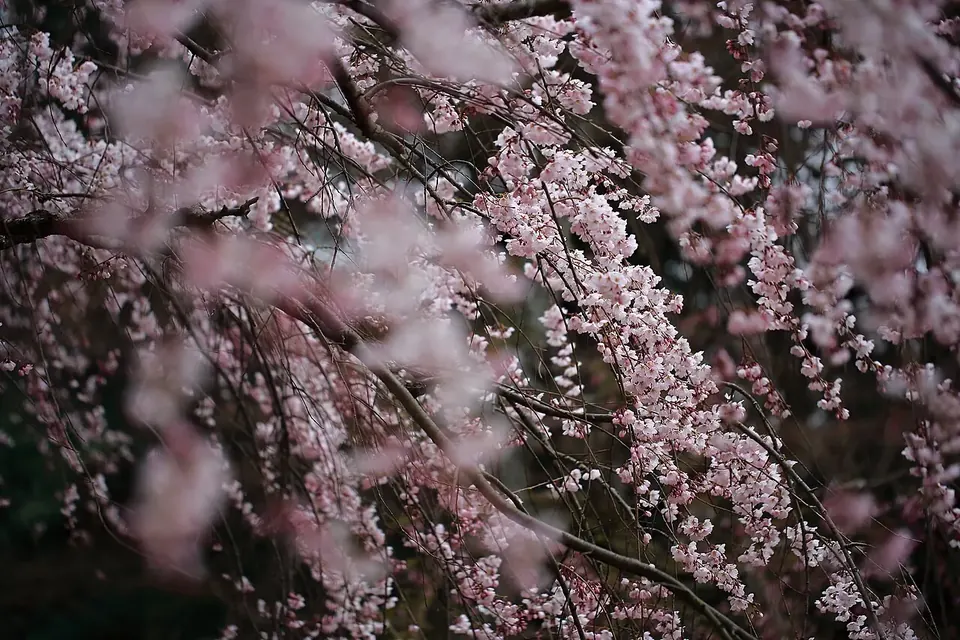
Hanami and the cherry blossom season
How the Japan Meteorological Agency declares the blossoms open, why it starts in Okinawa, and picnic etiquette under the trees.
 Seasons and festivals
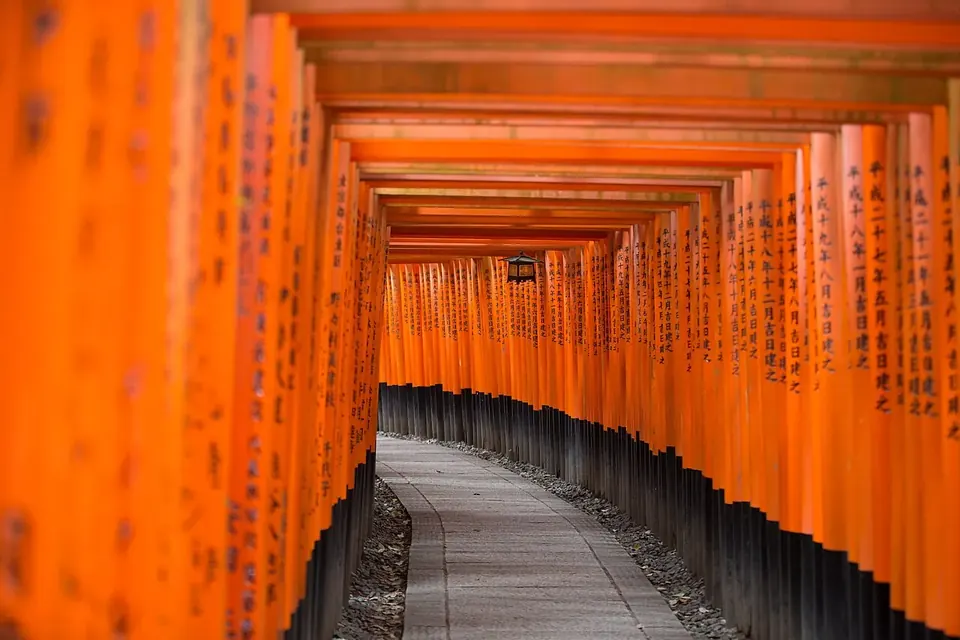
Visiting shrines and temples
Torii or temple gate, two claps or none: purification, prayer, omikuji and charms, with Tokyo's Sensō-ji as an example.
 Seasons and festivals
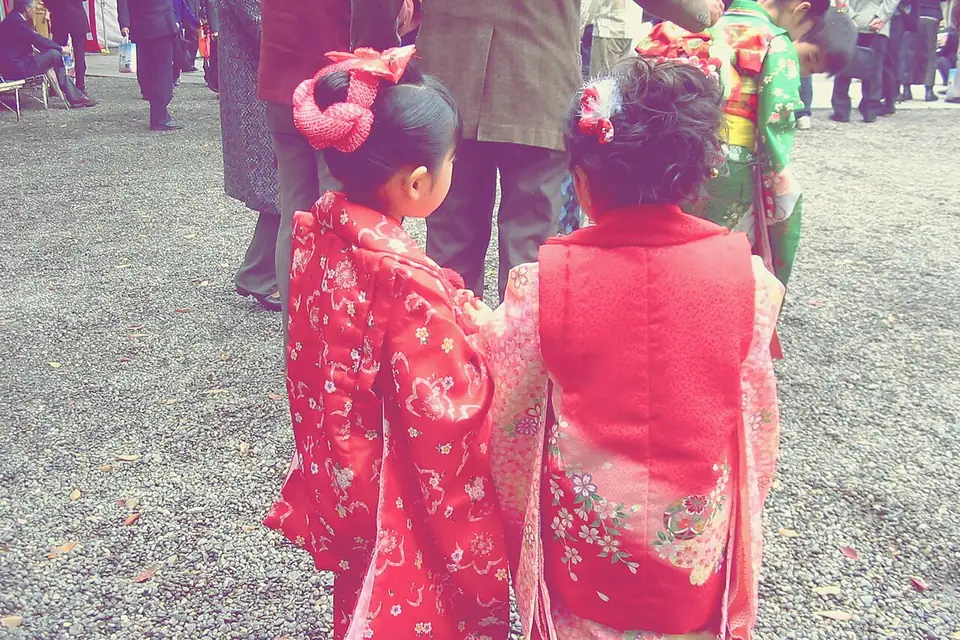
Shichi-Go-San in November
Kimono for the first time, a prayer at the shrine and a bag of red-and-white thousand-year candy: how families mark 15 November.