Glossary of Japanese home cooking: 120 words for ingredients, seasonings, methods and cuts
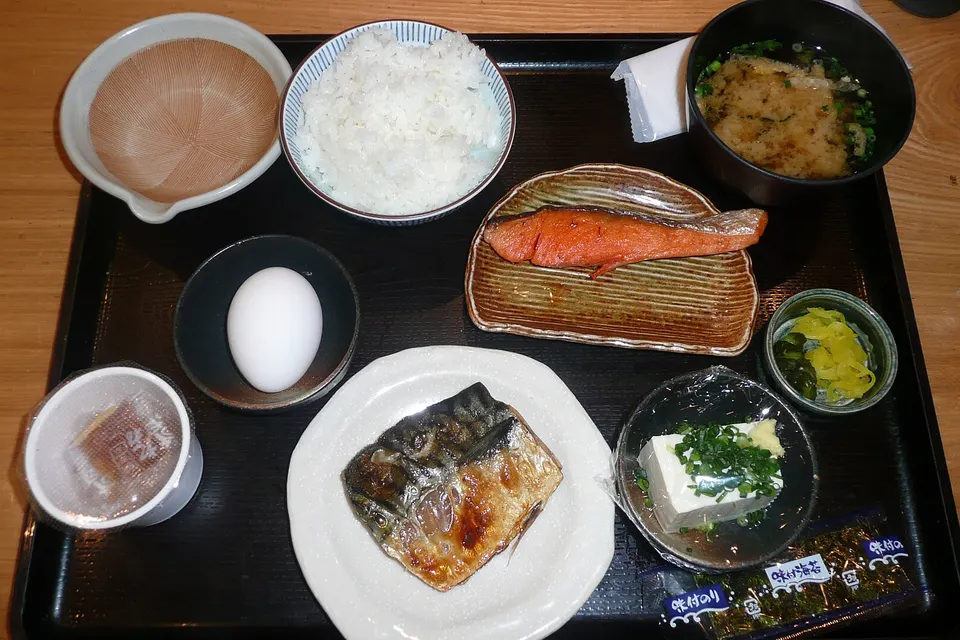
Japanese recipes and food labels are full of words that translate badly or not at all. "Light" soy sauce is the saltier one, "sweet sake" is a seasoning rather than a drink, and a single vegetable can be cut in a dozen named ways. This glossary gathers the terms you are most likely to meet in a Japanese home kitchen, a cookbook or an Asian grocery, grouped by theme, with a short plain-English definition for each.
- Terms are grouped in nine sections; each section has its own anchor, so you can link straight to it (for example #seasonings).
- Japanese words are given in the Hepburn romanisation used on packaging and in most English cookbooks, with long vowels marked (shōyu, kōji) and the Japanese script after them.
- Where a term has its own Engawa guide, the definition links to it.
- Last updated: 7 November 2026. Free to reuse, quote or print for teaching, with a link to this page.
The meal and the table
In 2013 UNESCO added "Washoku, traditional dietary cultures of the Japanese, notably for the celebration of New Year" to its Representative List of the Intangible Cultural Heritage of Humanity (UNESCO). The inscription concerns a set of social practices, not a list of dishes, and many of the words below describe how a meal is put together rather than what is in it.
- Washoku (和食)
- Japanese food, as opposed to yōshoku (Western-style dishes adapted in Japan) and chūka (Chinese-style dishes).
- Ichijū sansai (一汁三菜)
- "One soup, three dishes": the classic model of a home meal, served with rice and pickles. Many everyday meals are simpler, such as ichijū issai, one soup and one dish.
- Gohan (ご飯)
- Cooked rice, and by extension a meal. Asagohan, hirugohan and bangohan are breakfast, lunch and dinner.
- Shushoku (主食)
- The staple of a meal, usually rice, sometimes noodles or bread.
- Okazu (おかず)
- The dishes eaten with rice: the "side" dishes that are, in practice, most of the meal.
- Shiru / shirumono (汁物)
- Soups, above all miso soup (miso shiru) and clear soup (suimono).
- Teishoku (定食)
- A set meal in a restaurant or canteen: a main dish with rice, soup and pickles on one tray.
- Bentō (弁当)
- A packed meal in a box, made at home or bought; ekiben are the bentō sold at railway stations.
- Osechi ryōri (お節料理)
- The New Year dishes packed in lacquered boxes and prepared before the holiday.
- Itadakimasu / gochisōsama deshita
- The phrases said before and after a meal, roughly "I humbly receive" and "it was a feast".
- Shun (旬)
- The season when a food is at its best. Menus, gifts and home cooking pay close attention to it.
Dashi and umami
Most savoury Japanese dishes start from a light stock. Our full guide to dashi explains each method in detail.
- Dashi (出汁)
- Stock made by a short extraction of dried ingredients in water; it is the base of miso soup, simmered dishes and noodle broths.
- Kombu (昆布)
- Dried kelp, rich in glutamate. Soaked or gently heated, never boiled hard, which makes the stock slimy and bitter.
- Katsuobushi (鰹節)
- Skipjack tuna that is simmered, smoked and dried until hard, then shaved into flakes (kezuribushi).
- Niboshi / iriko (煮干し)
- Small dried sardines or anchovies, used for a stronger, everyday stock.
- Hoshi-shiitake (干し椎茸)
- Dried shiitake mushrooms; their soaking water is a stock in itself and the base of vegetarian dashi.
- Awase dashi (合わせ出汁)
- "Combined" stock, usually kombu and katsuobushi together.
- Ichiban dashi / niban dashi
- First and second stock: the delicate first extraction for clear soups, then a second, stronger one from the same ingredients for simmering and miso soup.
- Dashi pack / instant dashi
- Tea-bag sachets of ground ingredients, or granules (dashi no moto) that often contain salt and flavour enhancers: check the label.
- Shōjin dashi (精進出汁)
- Plant-based stock from kombu, dried shiitake or dried vegetables, from the Buddhist temple cooking called shōjin ryōri.
- Umami (旨味)
- The savoury taste named by the chemist Ikeda Kikunae, who identified glutamate as the source of the flavour of kombu stock.
Seasonings and condiments
A traditional mnemonic, sa-shi-su-se-so, gives the order in which basic seasonings go into a simmered dish: satō (sugar), shio (salt), su (vinegar), seuyu (an old spelling of shōyu) and miso. Sugar goes in early because it penetrates slowly; soy sauce and miso go in late to keep their aroma. For the different soy sauces, see our guide to soy sauce types.
- Shōyu (醤油)
- Soy sauce, brewed from soybeans, wheat, salt and kōji.
- Koikuchi (濃口)
- "Dark" soy sauce, the all-purpose standard.
- Usukuchi (淡口)
- "Light" soy sauce: lighter in colour, but saltier. Used where the colour of the food should stay pale.
- Tamari (溜まり)
- Thick soy sauce made mostly or entirely from soybeans, associated with central Japan; often (not always) wheat-free.
- Miso (味噌)
- Fermented paste of soybeans, salt and kōji. Classified by the kōji grain: kome (rice), mugi (barley) or mame (soybean) miso.
- Shiro miso / aka miso / awase miso
- White (short-fermented, mild, often sweet), red (longer-aged, stronger) and blended miso.
- Mirin (味醂)
- Sweet rice seasoning brewed from glutinous rice, kōji and distilled spirit; gives gloss and a rounded sweetness.
- Hon-mirin / mirin-fū chōmiryō
- "True" mirin, which contains alcohol, versus "mirin-style seasoning", a cheaper low-alcohol substitute made with syrups.
- Ryōrishu (料理酒)
- Cooking sake, usually salted. Drinking sake can be used instead, without the added salt.
- Su / komezu (酢 / 米酢)
- Vinegar; rice vinegar is the standard, milder than most Western vinegars.
- Ponzu (ポン酢)
- Citrus juice and vinegar, usually mixed with soy sauce, for hot pots, salads and grilled fish.
- Mentsuyu (麺つゆ)
- Concentrated noodle sauce of dashi, soy sauce and mirin, diluted for dipping or for broth.
- Tare (たれ)
- Any thick basting or dipping sauce, such as the sweet soy glaze of grilled eel or yakitori.
- Wasabi (山葵)
- Grated rhizome of Wasabia japonica. Much of the "wasabi" sold in tubes and tins is mainly horseradish and mustard: read the ingredients.
- Karashi (辛子)
- Hot Japanese mustard, served with oden, natto and pork cutlets.
- Shichimi tōgarashi (七味唐辛子)
- "Seven-flavour chilli": a blend of chilli with spices and seeds such as sansho, sesame and orange peel. Ichimi is plain chilli.
- Sanshō (山椒)
- Japanese pepper, the tingling ground husk of Zanthoxylum piperitum, classic on grilled eel.
- Yuzu kosho (柚子胡椒)
- A paste of yuzu peel, green chilli and salt from Kyushu; "kosho" here means chilli, not pepper.
- Goma (胡麻)
- Sesame. Irigoma is toasted seed, surigoma ground seed, neri goma sesame paste.
- Furikake (ふりかけ)
- Dry seasoning sprinkled over rice: typically sesame, nori, salt and dried fish or egg.
- Nori (海苔)
- Sheets of dried laver seaweed, for onigiri and sushi rolls; ajitsuke nori is seasoned.
- Wakame (若布)
- Tender seaweed sold dried or salted, a standard miso soup ingredient.
- Aonori (青のり)
- Flakes of green seaweed sprinkled on okonomiyaki and yakisoba.
Rice
For the full cooking method, see rice in Japan.
- Kome (米)
- Raw rice. Cooked, it becomes gohan or meshi.
- Uruchimai (粳米)
- Ordinary short-grain Japonica rice, eaten daily.
- Mochigome (糯米)
- Glutinous or "sticky" rice, used for mochi, sekihan and sweets. It contains no gluten.
- Hakumai / genmai (白米 / 玄米)
- Polished white rice / brown rice with the bran left on.
- Shinmai (新米)
- New-crop rice, sold in autumn and prized for its moisture and aroma.
- Togu (研ぐ)
- To wash rice by rubbing and rinsing it until the water runs almost clear.
- Okoge (お焦げ)
- The crisp golden crust at the bottom of the pot.
- Onigiri / omusubi (おにぎり / おむすび)
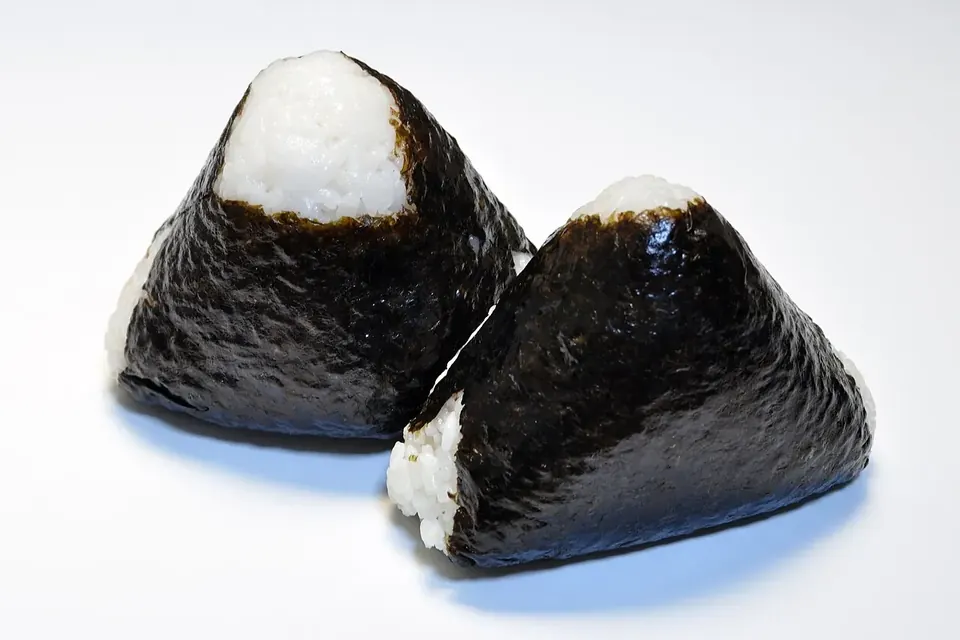
- Hand-shaped rice balls, often with a filling and wrapped in nori.
- Okayu (お粥)
- Rice porridge, a food for invalids and for the seventh day of New Year (nanakusa-gayu).
- Takikomi gohan (炊き込みご飯)
- Rice cooked with seasonings and ingredients such as mushrooms, chestnuts or chicken.
- Sushi-meshi / shari (鮨飯 / シャリ)
- Rice seasoned with vinegar, sugar and salt for sushi.
- Sekihan (赤飯)
- Glutinous rice steamed with red azuki beans, for celebrations.
- Ochazuke (お茶漬け)
- Rice with green tea or dashi poured over it, often with a pickled plum or salted salmon.
Kōji, fermentation and pickles
- Kōji (麹)
- Steamed rice, barley or soybeans grown with the mould Aspergillus oryzae; its enzymes break down starch and protein. It is the starter behind miso, soy sauce, sake, mirin and rice vinegar.
- Shio-kōji (塩麹)
- Kōji fermented with salt and water: a seasoning and marinade that tenderises meat and fish.
- Amazake (甘酒)
- A sweet, thick drink made either from rice and kōji (alcohol-free) or from sake lees.
- Sakekasu (酒粕)
- Sake lees, the paste left after pressing sake; used in soups, marinades and pickles.
- Nattō (納豆)
- Soybeans fermented with Bacillus subtilis var. natto, sticky and pungent; eaten over rice.
- Tsukemono (漬物)
- Pickles of every kind, served with almost every rice meal.
- Asazuke (浅漬け)
- "Shallow" quick pickles, salted for a few hours to a day.
- Nukazuke (糠漬け)
- Vegetables fermented in a bed of salted rice bran (nukadoko) that is stirred daily.
- Umeboshi (梅干し)
- Salted, sun-dried ume (Japanese apricot), very sour; often coloured red with shiso leaves.
- Takuan (沢庵)
- Pickled daikon radish, traditionally dried and fermented in rice bran, often yellow.
- Gari (ガリ)
- Sweet pickled ginger served with sushi. Beni shōga is the red, sharp shredded ginger for yakisoba and gyūdon.
- Fukujinzuke (福神漬け)
- Sweet soy-pickled mixed vegetables, the usual garnish for Japanese curry.
Tofu and other soy and plant foods
- Tōfu (豆腐)
- Soy milk curdled with a coagulant such as nigari (magnesium chloride) and set in a block.
- Momen-dōfu / kinu-dōfu
- "Cotton" tofu, pressed in cloth-lined moulds, firm and textured / "silken" tofu, set without pressing, smooth and soft.
- Abura-age (油揚げ)
- Thin sheets of deep-fried tofu, used in miso soup and as pouches for inari-zushi.
- Atsu-age (厚揚げ)
- Thick blocks of tofu fried only on the outside.
- Yuba (湯葉)
- The skin that forms on heated soy milk, lifted off and eaten fresh or dried.
- Okara (おから)
- The pulp left after soy milk is pressed; simmered with vegetables as a side dish.
- Edamame (枝豆)
- Young green soybeans boiled in the pod.
- Kinako (きな粉)
- Roasted soybean flour, dusted on mochi and sweets.
- Konnyaku (蒟蒻)
- A firm, almost calorie-free jelly made from the corm of the konjac plant; shirataki are konnyaku noodles.
- Fu (麩)
- Wheat gluten, sold dried in small shapes for soups or fresh (nama-fu).
- Azuki (小豆)
- Small red beans, cooked with sugar into anko, the sweet paste of Japanese confectionery.
- Daikon (大根)
- The long white radish: simmered, pickled, or grated (daikon oroshi) to go with grilled and fried food.
- Shiso / ōba (紫蘇 / 大葉)
- Perilla, an aromatic herb of the mint family; the green leaves garnish sashimi, the red colour umeboshi.
- Mitsuba (三つ葉)
- Japanese wild parsley, added at the last moment to soups and custards.
- Gobō (牛蒡)
- Burdock root, earthy and fibrous, the heart of kinpira gobō.
Cooking methods and dishes
Japanese cookbooks often organise dishes by method rather than by ingredient. The suffix tells you how the food was cooked.
- Yakimono (焼き物)
- Grilled or pan-fried dishes. Shioyaki is salt-grilled fish; teriyaki is food glazed with soy, mirin and sugar until shiny.
- Nimono (煮物)
- Simmered dishes, usually in seasoned dashi. Nikujaga, beef and potatoes, is the best known.
- Otoshibuta (落とし蓋)
- A "drop lid" of wood, metal or paper placed directly on simmering food so a little liquid covers everything evenly.
- Agemono (揚げ物)
- Deep-fried dishes: tempura (light batter), karaage (marinated, starch-coated), tonkatsu (breaded pork cutlet).
- Mushimono (蒸し物)
- Steamed dishes such as chawanmushi, a savoury egg custard set in a cup.
- Aemono (和え物)
- Vegetables "dressed" with a sauce: goma-ae with sesame, shira-ae with mashed tofu.
- Ohitashi (お浸し)
- Blanched greens soaked in seasoned dashi.
- Sunomono (酢の物)
- Vinegared salads, such as cucumber and wakame.
- Itamemono (炒め物)
- Stir-fried dishes; Okinawa's chanpurū belong here.
- Nabemono (鍋物)
- Hot pots cooked at the table: yosenabe, sukiyaki, shabu-shabu.
- Donburi (丼)
- A bowl of rice with a topping: oyakodon (chicken and egg), gyūdon (beef), katsudon (pork cutlet).
- Tamagoyaki (卵焼き)
- A rolled omelette cooked in layers in a rectangular pan.
- Nikiri (煮切り)
- Briefly boiling sake or mirin to drive off alcohol before use.
- Shimofuri (霜降り)
- Pouring boiling water over fish or meat until the surface turns white, to remove odours and scum before simmering. (The same word also describes marbled beef.)
- Aku-nuki (灰汁抜き)
- Removing bitterness or scum: skimming a pot, or soaking vegetables such as burdock and aubergine in water.
Knife cuts
Recipe instructions name the cut in one word; these are the ones you will meet most.
- Wagiri (輪切り)
- Rounds, cut straight across a cylindrical vegetable.
- Hangetsu-giri (半月切り)
- Half-moons: rounds cut in half.
- Ichō-giri (いちょう切り)
- Quarter-rounds, shaped like a ginkgo leaf.
- Sengiri (千切り)
- Very fine julienne, as for shredded cabbage.
- Hyōshigi-giri (拍子木切り)
- Batons, like the wooden clappers they are named after.
- Sainome-giri (賽の目切り)
- Dice.
- Mijin-giri (みじん切り)
- Fine mince, for onion, garlic or ginger.
- Kushigata-giri (くし形切り)
- Wedges, like the teeth of a comb, for onions and tomatoes.
- Rangiri (乱切り)
- Irregular angled chunks made by rolling the vegetable a quarter turn between cuts; more surface for simmering.
- Sasagaki (ささがき)
- Thin shavings whittled off the end of a root, typical for burdock.
- Naname-giri (斜め切り)
- Diagonal slices, for spring onions and long vegetables.
- Katsura-muki (桂剥き)
- Peeling a daikon into one long, thin sheet: a classic test of knife skill.
- Mentori (面取り)
- Bevelling the edges of chunks so they do not break up while simmering.
Noodles
- Udon (うどん)
- Thick wheat noodles, served hot in broth or cold with a dipping sauce.
- Soba (蕎麦)
- Buckwheat noodles, usually blended with some wheat flour; jūwari soba is all buckwheat. Buckwheat is a common allergen.
- Sōmen (素麺)
- Very thin wheat noodles, eaten chilled in summer.
- Hiyamugi (冷麦)
- Wheat noodles slightly thicker than sōmen, also served cold.
- Rāmen (ラーメン)
- Wheat noodles made with alkaline water (kansui), served in broths of Chinese origin.
- Yakisoba (焼きそば)
- Stir-fried wheat noodles with a sweet-savoury sauce; despite the name, no buckwheat.
- Tsuyu / tsukejiru (つゆ / つけ汁)
- The broth or dipping sauce served with noodles.
- Zaru (ざる)
- A bamboo draining tray; zaru soba is chilled soba served on one, with dipping sauce.
Where to go next
The quickest way to make these words familiar is to cook with them. Start with a pot of dashi and a bowl of miso soup: our guide to making miso soup uses a dozen of the terms above in one recipe. The Ministry of Agriculture, Forestry and Fisheries keeps an English-language section on washoku, with background on the inscription and on regional cuisines (MAFF, Washoku).
Sources
- UNESCO, Intangible Cultural Heritage, "Washoku, traditional dietary cultures of the Japanese, notably for the celebration of New Year", inscribed 2013, consulted November 2026.
- Ministry of Agriculture, Forestry and Fisheries of Japan, Washoku, consulted November 2026.
- Ikeda K., "On a new seasoning", Journal of the Tokyo Chemical Society 30, 1909 (English translation in Chemical Senses 27(9), 2002).
 Japanese home cooking
Dashi, the stock behind Japanese cooking
Kombu, katsuobushi, shiitake and niboshi: how each dashi is made, and why umami was discovered in a pot of it.
 Japanese home cooking
The five types of Japanese soy sauce
Why 'light' soy sauce is saltier, which one goes with sashimi, and how to read a Japanese soy sauce label.
 Japanese home cooking
Rice in Japan, and how to cook it
Short-grain rice, washed and soaked, cooked by absorption and rested: the method, the ratios and the onigiri that follow.