Making miso soup: the main types of miso, how miso is made, and an everyday recipe
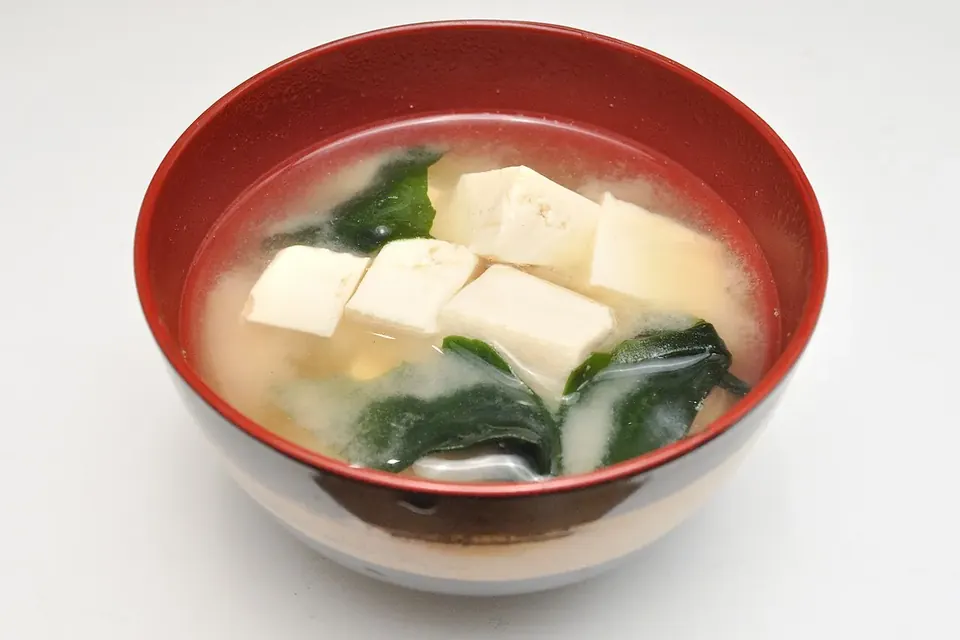
Miso is a fermented paste of soybeans, salt and a mould-grown grain called koji. It flavours soups, marinades, dressings and glazes, and a bowl of miso soup is part of the standard Japanese meal of rice, soup and side dishes. There are hundreds of regional misos, but they fall into a few families. Once you know them, choosing and using miso becomes straightforward.
- Miso is made by fermenting soybeans, salt and koji. The koji is grown on rice, barley or soybeans.
- Misos are classified by koji (rice, barley, soybean) and by colour and taste (white and sweet to red and salty).
- Rice miso is by far the most common type in Japan.
- For soup, dissolve miso at the end and don't let it boil.
How miso is made
Koji is steamed grain or beans inoculated with the mould Aspergillus oryzae, the same organism used for soy sauce, sake and mirin. Its enzymes break proteins into amino acids, which give savoury taste, and starches into sugars. Cooked soybeans are mashed and mixed with koji and salt, packed into vats, and left to ferment and age for anywhere from a few weeks to several years. More koji and less salt give a sweeter, paler miso that ages quickly; more salt and longer ageing give darker, saltier, more pungent miso. The browning comes from reactions between sugars and amino acids during ageing (the Maillard reaction).
Types by koji
| Type | Koji | Character | Associated regions |
|---|---|---|---|
| Kome miso (米味噌) | Rice | From sweet and mild to salty and rich; the most common type | Most of Japan |
| Mugi miso (麦味噌) | Barley | Sweet, earthy, often chunky | Kyushu, Shikoku, Chugoku |
| Mame miso (豆味噌) | Soybean | Dark, dense, slightly bitter and astringent; long aged | Aichi, Gifu, Mie (Tokai region) |
| Awase miso (合わせ味噌) | Blend | A mix of misos, balanced for everyday soup | Sold everywhere |
Types by colour and taste
- Shiro miso (white): pale yellow to beige. Short fermentation, often a high proportion of koji. Sweet types such as Kyoto's Saikyo miso are very low in salt and almost creamy; used in winter soups, glazes and New Year's white miso zōni in the Kyoto area.
- Tanshoku miso (light-coloured): the everyday middle ground. Shinshu miso from Nagano, a light, fairly salty rice miso, is one of the most widely sold styles in Japan.
- Aka miso (red): longer fermentation, reddish brown, saltier and more robust. Sendai miso is a classic red rice miso.
- Mame miso: very dark; Hatcho miso from Okazaki in Aichi is the best known, aged in large wooden vats under stone weights.
Labels in Japan also distinguish sweet (ama), mildly sweet (amakuchi) and salty (karakuchi) misos. If you are new to miso, a light rice miso or an awase blend is the most versatile choice.
Everyday miso soup
For two bowls:
- Make or heat 400 ml of dashi. Kombu and bonito, niboshi, or a dashi pack all work. See our guide to dashi.
- Add firm ingredients first (root vegetables, potatoes, onion) and simmer until tender.
- Add soft ingredients (tofu, wakame, greens) for the last minute.
- Turn the heat to low. Put about 1.5 to 2 tablespoons of miso in a ladle or small sieve, lower it into the soup and stir with chopsticks until it dissolves.
- Heat just until steaming, without boiling, which dulls the aroma. Serve at once, with chopped spring onion if you like.
Taste and adjust: misos vary greatly in saltiness, so the amount is a starting point. Many households keep two misos and blend them in the ladle.
Ingredients by season
| Season | Ingredient ideas |
|---|---|
| Spring | New onions, cabbage, clams (asari), bamboo shoots |
| Summer | Aubergine, okra, myoga ginger, cold miso soup (hiyajiru) in some regions |
| Autumn | Mushrooms, sweet potato, taro (satoimo) |
| Winter | Daikon, carrot, pork and root vegetables (tonjiru), white miso soups |
| All year | Tofu, wakame, fried tofu (aburaage), spring onion |
Choosing miso abroad
Outside Japan, miso is usually labelled simply "white" or "red", or by origin. White miso suits light soups, dressings and marinades; red miso suits hearty soups and stews; an awase blend is the best single choice for everyday soup. Look at the ingredient list: traditional miso contains only soybeans, grain, salt and koji, while some commercial products add dashi (labelled dashi-iri), alcohol to stop fermentation, or sweeteners. Unpasteurized miso is still alive and continues to ferment slowly in the fridge.
Beyond soup
- Miso marinade: fish or pork marinated in sweet white miso with mirin and sake, then grilled (saikyo-yaki).
- Miso glaze: miso, sugar and mirin on grilled aubergine or tofu (dengaku).
- Dressings and dips: miso with vinegar and mustard for vegetables; miso mayonnaise for cucumber.
- Pickles: vegetables buried in miso become miso-zuke, one of the families covered in our guide to Japanese pickles.
Miso and koji at home
Many families once made their own miso every winter, when the cold slows unwanted microbes, and the custom of temae miso ("handmade miso") is enjoying a revival through community workshops. The method is simple: cooked, mashed soybeans mixed with rice koji and salt, packed tightly into a container to remove air, covered with salt and a weight, and left for six months to a year. Koji itself is now sold widely as shio-kōji (salted koji), a seasoning used to marinate and tenderize meat and fish.
Storage and salt
Miso keeps for months in the fridge in a sealed container; press cling film onto the surface to slow drying and darkening, which is harmless. Pale, sweet misos change more quickly than dark, salty ones. Miso is salty: a bowl of miso soup typically contains a gram or two of salt. Japan's health ministry recommends that adults keep daily salt intake below about 7.5 g for men and 6.5 g for women, so many people use less miso and more dashi and vegetables for flavour.
Sources
- Ministry of Health, Labour and Welfare (MHLW), Dietary Reference Intakes for Japanese (2020), target salt intake.
- Japan Federation of Miso Manufacturers Cooperatives, information on miso types and production, consulted October 2026.
- Ministry of Agriculture, Forestry and Fisheries (MAFF), "Our Regional Cuisines" (Uchi no kyōdo ryōri) database, consulted October 2026.
 Japanese home cooking
Dashi, the stock behind Japanese cooking
Kombu, katsuobushi, shiitake and niboshi: how each dashi is made, and why umami was discovered in a pot of it.
 Japanese home cooking
Rice in Japan, and how to cook it
Short-grain rice, washed and soaked, cooked by absorption and rested: the method, the ratios and the onigiri that follow.
 Japanese home cooking
The five types of Japanese soy sauce
Why 'light' soy sauce is saltier, which one goes with sashimi, and how to read a Japanese soy sauce label.