Natto: what it is, how it is made, and how to eat fermented soybeans
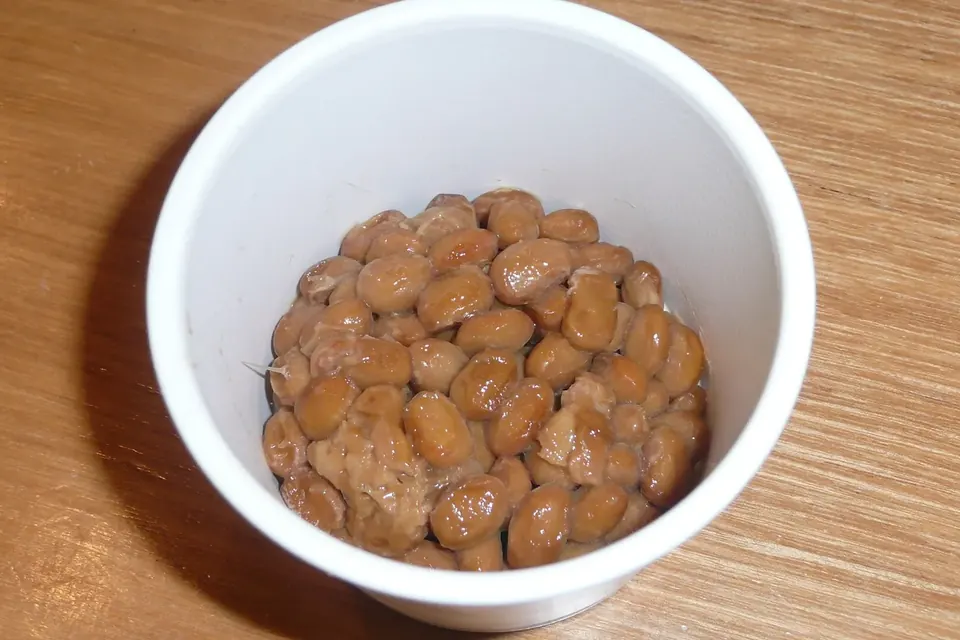
Natto is whole soybeans fermented by a single bacterium until they are coated in sticky, stringy threads. It smells strongly, tastes nutty and savoury, and divides opinion inside Japan as much as outside it. For many households it is simply breakfast: a small pack stirred with a sauce sachet and spooned over a bowl of hot rice.
- Natto is made by fermenting cooked soybeans with Bacillus subtilis var. natto, not with the koji mould used for miso and soy sauce.
- The threads are part of the food. Stir the beans well before adding the sauce.
- It is usually eaten over rice, often with mustard, spring onion or raw egg.
- Natto is very rich in vitamin K2. People taking warfarin should ask their doctor before eating it.
What natto is
Natto is one of several Japanese soy foods, but it works differently from the others. Miso and soy sauce rely on koji, a grain grown with the mould Aspergillus oryzae, and they age for months. Natto uses a bacterium, Bacillus subtilis var. natto, and the fermentation is over in about a day. A 2022 review of natto research in Biochemistry Research International describes the basic process: whole soybeans are washed and soaked, steamed or boiled until soft, inoculated with the bacterium while still hot, and kept warm until the surface is covered in a white film and a sticky polymer. The beans are then chilled, which slows the bacteria and lets the flavour settle.
The stickiness comes mainly from polyglutamic acid, a chain of amino acids that the bacterium produces. It is what makes the long silky strings that follow a spoon or chopsticks out of the pack. The smell, which some people compare to strong cheese, comes from other by-products of the same fermentation.
Where it comes from
Stories about the origin of natto are many and none can be proved. What is documented is that natto has long been strongly associated with eastern Japan, and with Mito in Ibaraki Prefecture in particular, where the Ministry of Agriculture's Kanto office notes that farmers grew soybeans and made natto at home, and where the city became known nationally for it. Natto is now sold in every supermarket in the country, but you will still meet people from western Japan who grew up without it and never took to it.
Types you will see in the shop
A typical supermarket chiller in Japan has dozens of natto products. Most come in stacked packs of three small tubs, each holding a single serving of about 40 to 50 g, with sachets of sauce and mustard tucked under the lid.
- Kotsubu and gokukotsubu (small and extra-small beans): the most common type. Small beans have more surface for the bacteria and give a softer texture that mixes easily with rice.
- Ōtsubu (large beans): firmer, with more bite and a more obvious bean flavour.
- Hikiwari (cracked): the soybeans are cracked and their skins removed before fermenting. Hikiwari is soft, very sticky and good for mixing into other dishes.
- Black soybean natto: made from kuromame, the black soybeans also used for New Year sweet beans. Slightly sweeter.
- Low-odour and low-string products: developed with selected bacterial strains for people who find standard natto too strong.
Outside Japan, natto is usually sold frozen in Asian grocery shops. It thaws in a few hours in the fridge and keeps its texture well.
How to eat a pack of natto
- Open the tub and lift off the thin plastic film. Set aside the sauce (tare) and mustard (karashi) sachets.
- Stir first, without the sauce. Use chopsticks and stir briskly in one direction, 30 to 50 times, until the beans are wrapped in a pale foam of strings. This makes the texture lighter and the flavour milder.
- Add the sauce and mustard and stir again a few times. Adding the liquid first makes the strings slack and watery.
- Add toppings if you like: chopped spring onion, a raw egg yolk, shredded nori, grated daikon, a few drops of soy sauce instead of the sachet, or a little kimchi.
- Spoon it over hot rice and eat it with chopsticks, lifting the bowl close to your mouth. To cut the strings, twirl the chopsticks a few times as you lift them away.
The classic breakfast plate is a bowl of rice, natto, miso soup and a few pickles. If you are cooking rice for the first time, our guide to rice in Japan explains how to wash and cook Japanese short-grain rice.
Cooking with natto
Natto is mostly eaten cold, but it is also an ingredient:
- Natto maki: a thin sushi roll with natto and spring onion, a standard item at conveyor-belt sushi bars.
- Natto spaghetti: a Japanese-style pasta with natto, soy sauce, butter and shredded nori, tossed in at the end so the beans only warm through.
- Natto fried rice and omelettes: heat softens the smell and the strings.
- Natto in miso soup (natto-jiru): a country dish of north-eastern Japan, with the natto mashed or chopped and stirred into the soup at the end.
- Natto toast: natto with cheese on bread, grilled until the cheese melts.
Heating natto changes it. A 2006 study published in the Journal of Nutritional Science and Vitaminology found that boiling natto sharply reduced the number of live bacteria and the amount of vitamin K2 it contained. That matters for one group of readers, below.
Nutrition and the warfarin caution
Natto is a good source of protein and fibre, like other soy foods. What makes it unusual is vitamin K2 in the form called menaquinone-7 (MK-7), which the bacterium produces during fermentation. The 2022 review mentioned above notes that natto contains about a hundred times more MK-7 than most cheeses, which are the other notable source.
Vitamin K is essential for blood clotting, and the anticoagulant drug warfarin works by blocking its action. This is why people on warfarin in Japan are routinely told to avoid natto. Back in 1996, Japanese researchers at a Tokyo hospital reported in the Japanese Journal of Thrombosis and Hemostasis that eating even 10 to 30 g of natto sharply raised blood levels of MK-7, and they advised discouraging patients on anticoagulants from eating it. If you take warfarin or any other blood thinner, talk to your doctor or pharmacist before eating natto, and do not take natto-based supplements without medical advice. Natto also contains an enzyme, nattokinase, that is sold as a supplement; it is not a substitute for prescribed medicine.
Natto is also a soy product, so it is not suitable for people with a soybean allergy. The mustard and sauce sachets usually contain wheat.
Storing natto
- Fridge: keep natto chilled and eat it by the date on the pack. Fermentation continues slowly, so older natto becomes stronger and may develop small white crystals of amino acids on the beans. These are harmless but crunchy.
- Freezer: natto freezes well in its tubs for about a month. Thaw it overnight in the fridge.
- Making your own: home natto is possible with starter spores sold for the purpose and a warm, clean place at about 40 °C for 18 to 24 hours. Use clean equipment, and discard anything that smells sour, rotten or looks discoloured.
If you are trying it for the first time
Start with a small-bean natto, stir it well, add all of the sauce and mustard, and eat it over plenty of warm rice with spring onion. The rice softens the texture and the toppings cut the smell. Many people who disliked natto the first time come back to it in a hikiwari version mixed into fried rice or an omelette, where it adds a savoury depth similar to a mature cheese.
Sources
- Afzaal M. et al., "Nutritional Health Perspective of Natto: A Critical Review", Biochemistry Research International, 2022 (via the US National Library of Medicine, PubMed Central).
- Homma K. et al., "Treatment of Natto, a Fermented Soybean Preparation, to Prevent Excessive Plasma Vitamin K Concentrations in Patients Taking Warfarin", Journal of Nutritional Science and Vitaminology 52(5), 2006, pp. 297–301.
- Kudo T. and Sudo H., "Changes in Blood Levels of Vitamin K after Low-dose Administration of Natto", Japanese Journal of Thrombosis and Hemostasis 7(3), 1996, pp. 239–243.
- Elahi M. M. et al., "Consequence of patient substitution of nattokinase for warfarin after aortic valve replacement with a mechanical prosthesis", Proceedings (Baylor University Medical Center) 28(1), 2015.
- Ministry of Agriculture, Forestry and Fisheries, Kanto Regional Agricultural Administration Office, regional cuisine materials on Mito natto, consulted October 2026.
 Japanese home cooking
Rice in Japan, and how to cook it
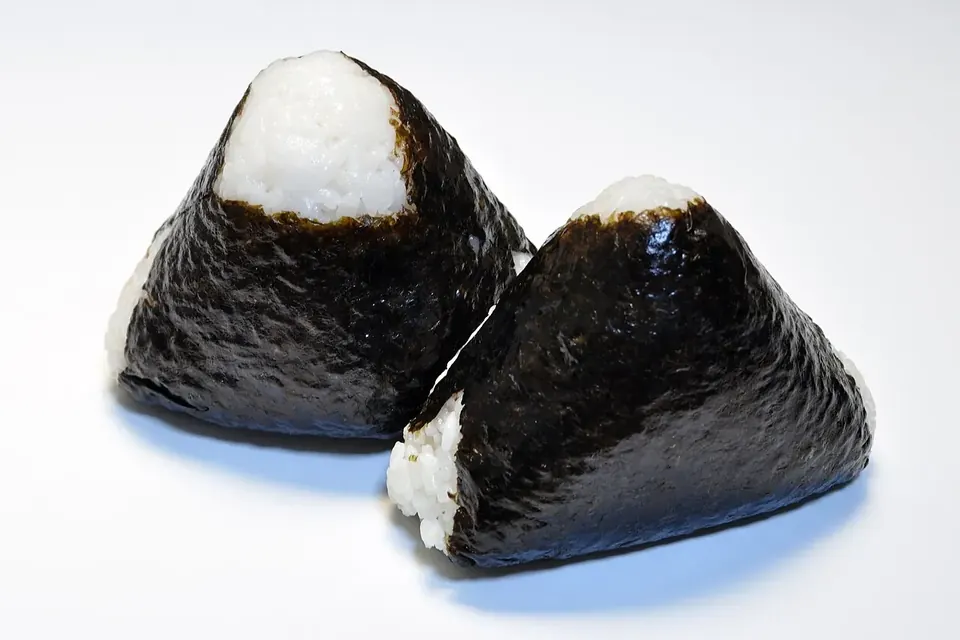
Short-grain rice, washed and soaked, cooked by absorption and rested: the method, the ratios and the onigiri that follow.
 Japanese home cooking
Making miso soup and choosing miso
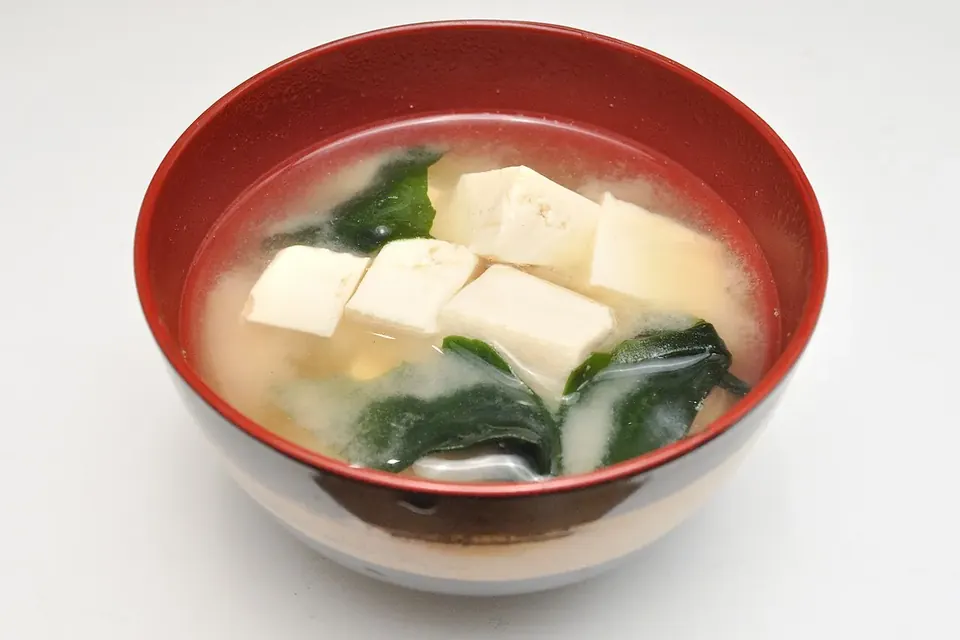
Rice, barley or soybean koji; white, red or mixed: how to choose a miso, and the one rule for miso soup.
 Japanese home cooking
The five types of Japanese soy sauce
Why 'light' soy sauce is saltier, which one goes with sashimi, and how to read a Japanese soy sauce label.